
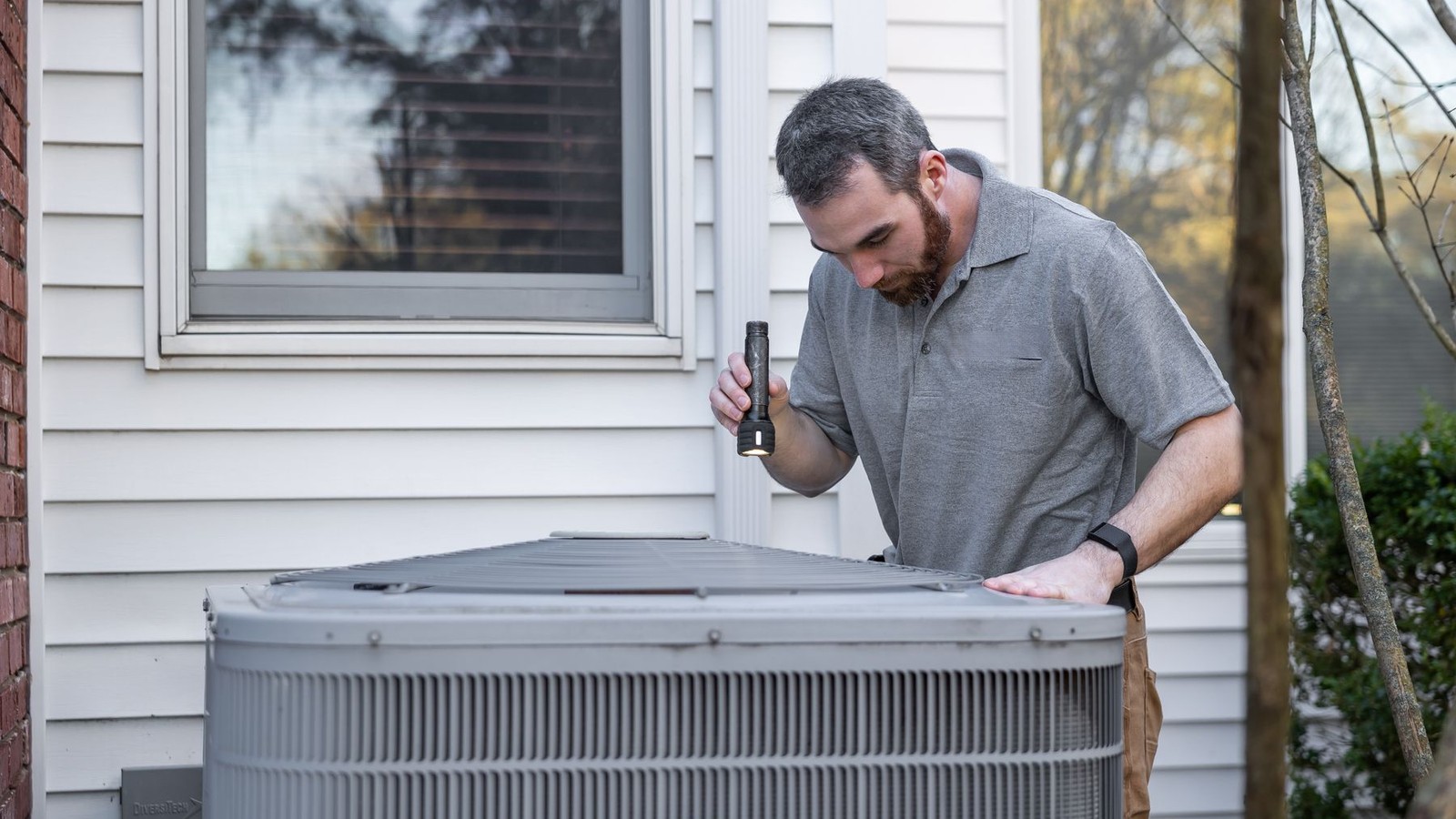
Single-Stage, Two-Stage or Variable-Speed: What an Inverter AC Actually Changes in a Cape Coral Home
You're standing in your Cape Coral driveway looking at three quotes. One is for a single-stage system. One is two-stage. One is a variable-speed inverter unit, and it's $3,000 more than the cheapest option. The salesperson said it "runs smarter." That's not an answer.
Here's the straight version, in plain English, from a veteran-owned company that installs all three every week.
What the stages actually are
The "stage" refers to how many speeds the compressor — the part outside that does the actual cooling — can run at.
Single-stage: one speed. Full blast or off. It's a light switch.
Two-stage: two speeds. Roughly 65-70% capacity for normal conditions, 100% when it's brutal outside. It's a light switch with a dimmer setting.
Variable-speed (inverter): a compressor that can ramp anywhere from about 25% up to 100% and hold there, adjusting continuously. It's a dimmer with no clicks.
The indoor blower has speeds too, and on better systems it's variable as well. When people say "inverter AC," they usually mean both: a compressor and a blower that modulate instead of slamming on and off.
Why this matters more in Florida than almost anywhere else
In a climate with mild summers, the difference between these three is mostly about your power bill. In Southwest Florida, it's about humidity — and humidity is what actually makes a house feel bad.
Your AC removes moisture only while air is moving across a cold evaporator coil. A single-stage system in a Cape Coral home on a typical day cools the space to setpoint fast, then shuts off. Short cycle, hard stop. It hit the temperature but it didn't run long enough to pull much water out of the air. You get 74 degrees and clammy — the exact complaint we wrote about in undersized or oversized.
A variable-speed system does the opposite. It ramps down to a low speed and runs for long stretches at reduced capacity. Longer runtime at lower output equals dramatically more moisture removal. Homeowners describe the difference as the house feeling "drier" or "quieter" before they ever mention the bill.
Two-stage sits in between, and honestly, for a lot of Cape Coral and Fort Myers homes, that middle position is the sweet spot.
What each one is actually good at
Single-stage
Cheapest to buy. Cheapest to repair. Fewest electronics to fail in a lightning-heavy climate — and that matters here, which is why we recommend surge protection at the condenser on every system regardless of type. Parts are on every supply-house shelf in Lee County.
Best for: rental properties, homes you plan to sell within a few years, smaller well-insulated houses, or any situation where the up-front number is the number that matters. Also a reasonable choice for a snowbird property that sits empty half the year.
Two-stage
Noticeably better humidity control than single-stage because it spends most of its life on the low stage, running longer cycles. Quieter. Meaningfully lower bills than single-stage in a Florida summer. Repair costs are moderate and the technology has been around long enough that it's well understood.
Best for: most Cape Coral and Fort Myers homeowners who plan to stay put. This is the recommendation we make most often.
Variable-speed inverter
Best dehumidification, by a wide margin. Best efficiency. Quietest by far — a properly installed inverter condenser at low speed is close to inaudible from a lanai. Tightest temperature control, usually holding within a degree instead of swinging two or three.
Best for: larger homes, homes with rooms that never quite keep up, anyone who's sensitive to humidity, anyone who's staying in the home long enough for the efficiency to pay back, and homes where the outdoor unit sits close to a bedroom window or a lanai you actually use.
When the upgrade isn't worth the money
We'll talk homeowners out of variable-speed more often than you'd expect. The honest reasons:
- You're selling within about five years. The efficiency savings won't get anywhere near the price gap, and a higher-end AC doesn't move a listing price the way a kitchen does.
- Your ductwork is the actual problem. A variable-speed system attached to leaky attic ducts is an expensive way to keep cooling your attic. Fix the duct system first — the 15-minute test tells you whether that's you. Same goes for a house that's short on attic insulation.
- Your budget is tight enough that the upgrade eats the maintenance money. A well-maintained single-stage system outlives a neglected inverter every single time. If the extra $3,000 means you skip tune-ups, buy the cheaper unit and keep the service plan. And keep the records — your warranty depends on them.
- The system is going in a rarely-occupied property. An empty house doesn't benefit much from precision comfort control. It benefits from reliability and a sensible away-mode setup.
The thing nobody tells you about inverter systems
Variable-speed equipment is more sensitive to installation quality than anything else on the market. It relies on a properly matched indoor coil, a correctly sized and sealed duct system, an accurate refrigerant charge and control wiring that's actually right. Cut a corner on any of those and the system spends its life throwing fault codes instead of modulating.
It also has more electronics — inverter boards, communicating controls, sensors. In a region that leads the country in lightning strikes, that's a real consideration. It's not a reason to avoid the technology. It's a reason to insist on surge protection and to hire based on install quality rather than the bottom line on the quote.
Which is the whole point of reading the guarantee before you hire. A cheap install of expensive equipment is the worst outcome available.
How to decide in about two minutes
- Staying under 5 years, tight budget, decent ducts → single-stage.
- Staying long term, want lower bills and a house that doesn't feel damp → two-stage. This is the right answer for most people reading this.
- Big house, humidity complaints, rooms that never keep up, or noise matters → variable-speed, but only with duct and insulation work done first if it's needed.
And before any of it: get a real load calculation. Stage count means nothing if the tonnage is wrong. A properly sized two-stage system will outperform an oversized variable-speed one every day of a Cape Coral August.
Get a straight answer for your house
Every home is different — square footage, ceiling height, window orientation, insulation, duct condition. We'll walk your system, run the numbers, and tell you honestly which of the three makes sense, including when the answer is "keep what you have and fix the ducts."
Seven Level Air is veteran-owned and serves Cape Coral, Fort Myers and the surrounding communities. Contact us to schedule an inspection, repair or maintenance visit, or call (239) 402-3911.

