
Your AC Warranty Is Probably Void and You Don't Know It: The Maintenance Records Manufacturers Demand
Here's a conversation we have more often than we'd like. A Cape Coral homeowner's compressor fails at year seven on a ten-year parts warranty. They call the manufacturer. The manufacturer asks for maintenance records. There aren't any.
The claim gets denied, and a repair that should have cost a service call and a part becomes a several-thousand-dollar bill.
Almost every homeowner we meet believes their system is covered. A meaningful share of them are wrong, and they won't find out until the day it matters.
What the warranty actually says
Nearly every major HVAC manufacturer's limited warranty contains language requiring that the equipment be properly installed, operated, and maintained. Some spell out annual professional service explicitly. Others use softer phrasing about proper maintenance — which sounds vague until you're the one trying to prove you did it.
The burden of proof is on you. Not on the manufacturer, and not on whoever installed the system.
Three other conditions catch people just as often:
Registration. Most manufacturers require you to register the equipment within a set window after installation — frequently 60 or 90 days. Miss it and your ten-year warranty may automatically drop to the base term, which is often five years. This is the single most common gap we see, and it happens because the homeowner assumed the installing contractor handled it.
Licensed installation. Equipment installed by an unlicensed contractor, or bought online and self-installed, is generally not covered at all.
Transferability. Bought a Cape Coral home with a five-year-old system? The warranty may not have transferred to you, or may have required a transfer filing within a short window after closing.
Why Florida makes this worse
In a mild climate, a system might run a few hundred hours a year. In Southwest Florida, your AC runs most of the year, much of it at high load and high humidity. Coastal homes add salt air, which attacks coils and electrical components.
The practical result is that our systems reach the failure point where you'd want to file a warranty claim more often, and earlier, than systems almost anywhere else. The one place you'd most like the warranty to work is the place it's most likely to be tested.
What records should look like
"I get it serviced every year" is not documentation. What manufacturers accept, and what we recommend keeping:
- Dated invoices from a licensed contractor for every maintenance visit, showing the license number
- The equipment model and serial number on each invoice — this is what ties the service to your specific unit
- A description of what was performed — coil cleaning, drain line clearing, refrigerant check, electrical inspection, filter change. "Service call" alone is weak.
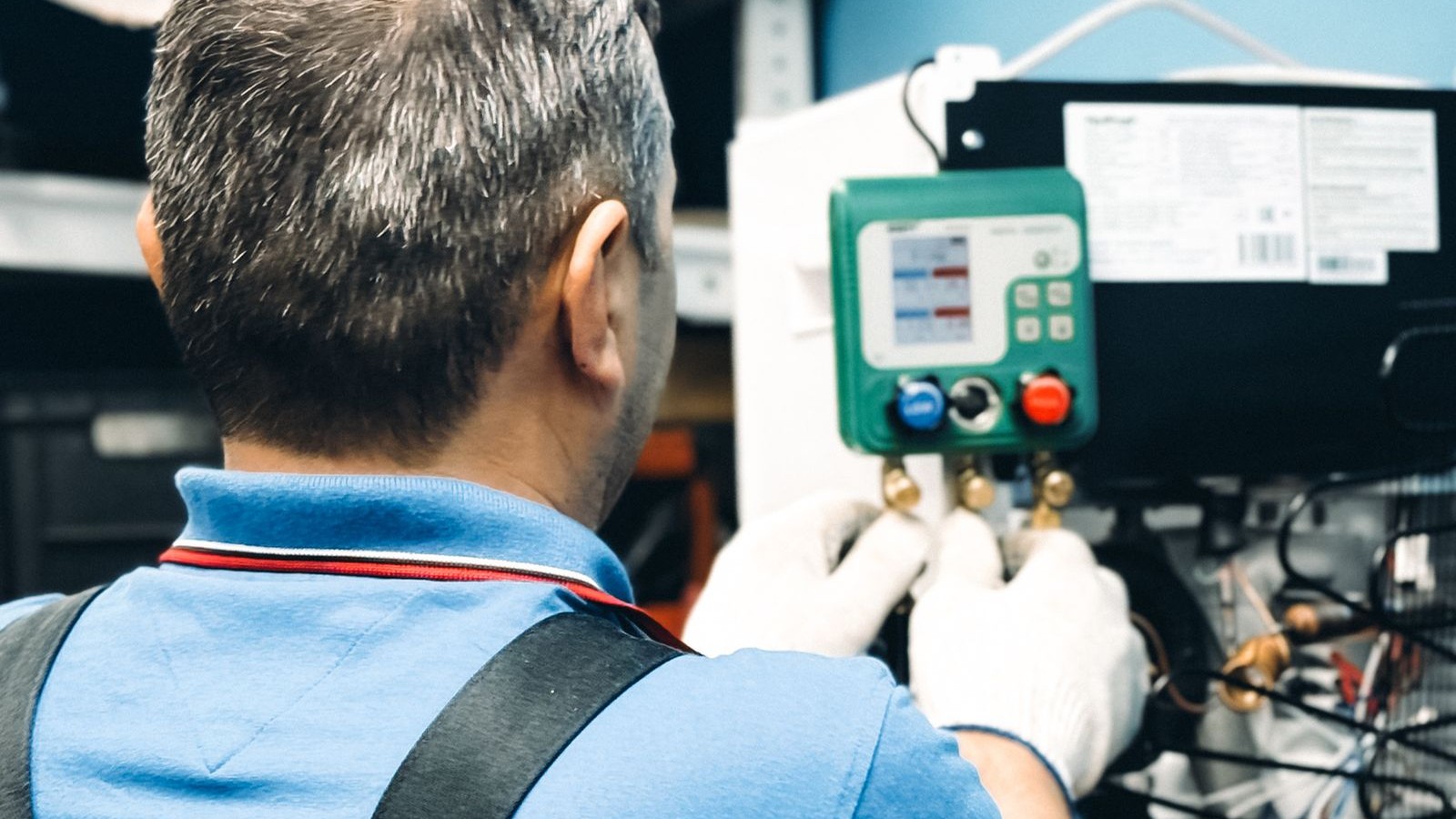
- Measurements taken — refrigerant pressures, temperature split, amp draws. This is what proves a real tune-up happened rather than a walkthrough.
- Your registration confirmation from the manufacturer
- The original installation invoice and permit
Keep them digitally. Paper invoices in a garage drawer in Florida have a poor survival rate, and so do garages in a flood.
How to check where you stand today
Twenty minutes, and worth doing before something breaks:
- Find your model and serial number. They're on the data plate on the outdoor unit and on the air handler.
- Check registration. Most manufacturers have an online lookup. If you can't confirm it's registered, assume it isn't.
- Find out your actual term. Registered and unregistered terms differ substantially. Know which one you have.
- Gather what records exist. Pull invoices from every company that has touched the system.
- Identify the gaps. Years with no documented service are the years a manufacturer will point to.
If you're inside the registration window on newer equipment, register it today. That's a free action that can double your parts coverage.
If your records have holes
You can't retroactively document maintenance you didn't get. What you can do is start a clean, consistent record from now on and keep it. A denied claim usually rests on a pattern of neglect, not a single missed year — and an unbroken record going forward is meaningfully better than nothing.
Annual maintenance is worth doing on its own merits regardless of paperwork. It catches a failing capacitor before it takes out a compressor, clears a drain line before it floods a ceiling, and keeps efficiency from drifting down while your electric bill drifts up. The warranty protection is the part nobody thinks about until the claim.
We'll document it properly
Seven Level Air is veteran-owned and based in Cape Coral. Our maintenance invoices include your model and serial numbers, the specific work performed and the readings taken — the documentation a manufacturer will actually accept if you ever need to file. We'll also check your registration status while we're there and tell you straight if there's a gap.
Schedule a maintenance visit or an inspection at sevenlevelair.com/contact.
Warranty terms vary by manufacturer, model and installation date. Check the specific terms for your equipment — we're glad to help you find them.

