
Why Ductwork Age Matters More Than the AC Unit's Age: When a Brand-New Cape Coral System Still Runs Hot Because Nobody Replaced the Ducts
Every year we get the same call: a Cape Coral homeowner just paid for a brand-new, high-SEER AC system, and it's still running hot in August. The outdoor unit is new. The indoor coil is new. The thermostat is set where it's always been. And the house still isn't cooling the way it should. Nine times out of ten, the problem isn't the equipment at all — it's the ductwork the new system is pushing air through.
A new AC can't fix what the ducts are losing
Here in Southwest Florida, most homes built before the early 2000s are still running on their original ductwork — flexible duct runs that sit in a hot attic for 20-plus years, slowly losing their insulation value, developing kinks at the joists, and leaking conditioned air at every connection that was never properly sealed. A new condenser and air handler can be rated for 96% efficiency on paper, but if 20-30% of that cooled air is leaking into a 140-degree attic before it ever reaches a supply vent, you're not getting anywhere close to that number in your living room.
We see this constantly on replacement jobs: the homeowner upgraded the equipment because that's the part they could see and research, while the ductwork — tucked out of sight in the attic — never came up in the conversation.
What aging ductwork actually looks like up there
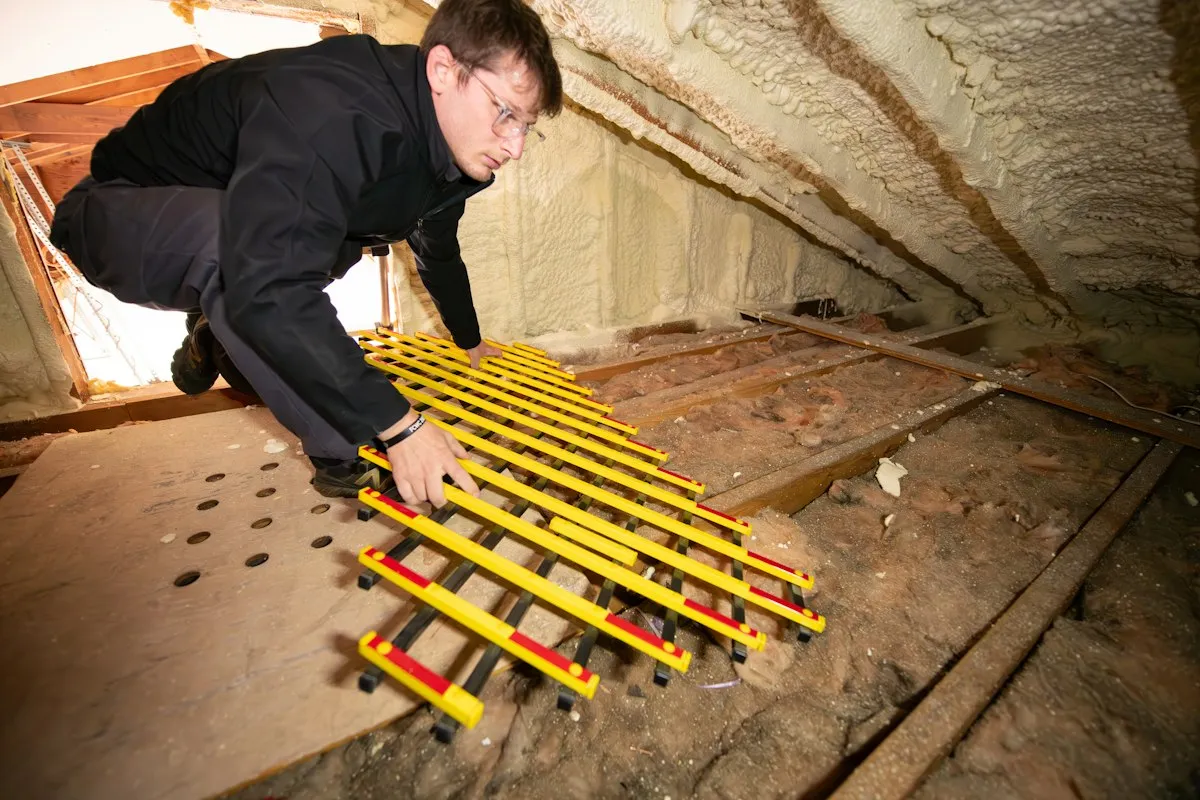
When we're in a Cape Coral attic on an install or a diagnostic call, the same handful of problems show up again and again:
- Crushed or kinked flex runs where the duct got pinned under insulation, pipes, or stored items, choking airflow to one or two rooms
- Separated connections at the plenum or branch takeoffs, where the mastic or tape has dried out and let go, dumping cooled air straight into the attic
- Compressed or missing insulation on the duct jacket itself, which lets attic heat soak straight through the duct wall before the air even reaches the room
- Undersized or overly long runs left over from an older, smaller system that never got resized when the house was upgraded
None of these show up on the new equipment's spec sheet, and none of them get fixed by installing a better condenser.
How to tell if this is your house
A few signs point straight at the ductwork rather than the unit itself: rooms that are consistently warmer than others no matter how you adjust the thermostat, a system that runs long cycles without ever quite catching up on the hottest days, or a noticeable gap between the temperature at the supply vent and the temperature you actually feel in the room a few minutes later. If your new system is short-cycling or struggling on 95-degree afternoons despite a clean filter and a full refrigerant charge, the ducts are the next place to look.
What a real duct evaluation involves
A proper check isn't just a glance at the attic from the access hatch. It means physically walking the duct runs, checking insulation condition and R-value, inspecting every connection for separation or leakage, and — where it matters — running a duct blaster test to put an actual number on how much conditioned air you're losing before it reaches your living space. That number is what tells us whether a sealing and insulation repair will solve the problem, or whether sections of the run need to be replaced outright.
Get the ducts checked before — or right alongside — your next AC install
If you're planning a system replacement, the smartest time to evaluate your ductwork is before the new equipment goes in, not after you're wondering why a brand-new AC still can't keep up. And if your system is already newer and still underperforming, a duct inspection is usually the fastest way to find out why.
Contact Seven Level Air to schedule an inspection, repair, or maintenance visit — we'll check the ductwork, not just the equipment.

