
Pool and Lanai Living: How Cape Coral's Outdoor Lifestyle Changes the AC Load Inside Your Home
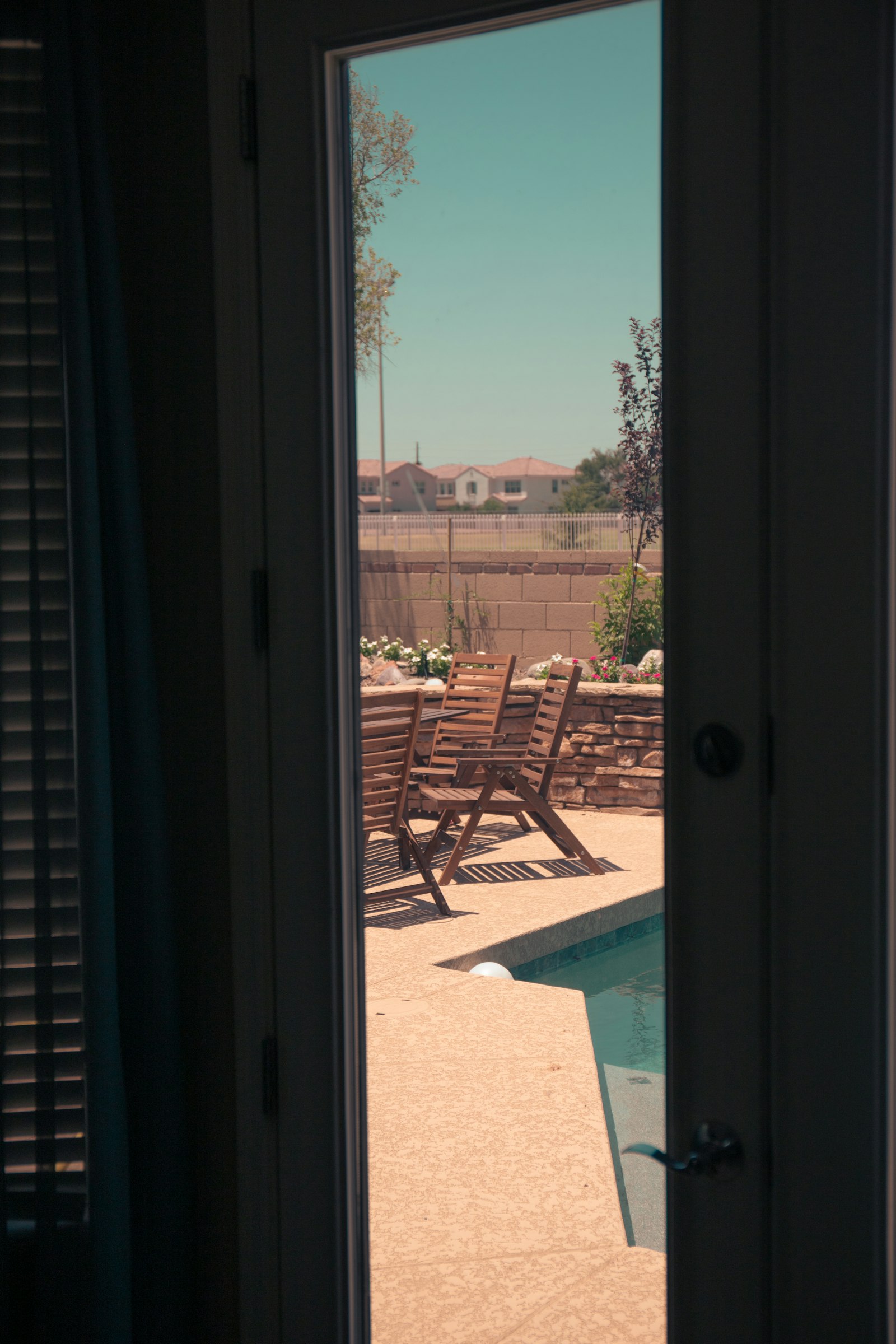
If you've lived in Cape Coral or Fort Myers for more than one summer, you already know the drill: the pool opens, the lanai gets used every evening, and the sliding door between the two stays cracked open a lot more than it used to. It feels harmless — you're just stepping in and out to grab a drink or check on the kids. But that open door is one of the biggest reasons a pool-and-lanai lifestyle quietly pushes your AC to work harder than the unit on the house next door with the same square footage.
Every open door is a humidity event, not just a temperature one
Outdoor air in SW Florida during pool season isn't just hot — it's carrying dramatically more moisture than the air your AC just spent 20 minutes wringing out of your living room. Every time that slider opens, humid outdoor air rolls in and your system doesn't just have to re-cool it, it has to re-dehumidify it. Cooling air is fast. Pulling moisture back out is slow. That's why a home with frequent pool traffic can feel "cool but sticky" even when the thermostat says you hit your setpoint — the temperature caught up before the humidity did.
Screened lanais don't count as conditioned space (even when they feel like it)
A screened enclosure cuts direct sun and bugs, but it does nothing to stop humid air from moving between the lanai and the house every time that door opens. Homeowners sometimes assume a nicely finished lanai is thermally "part of the house" because it looks and feels like an extension of it. It isn't. Your AC has zero ability to condition that space, and treating the doorway between them casually is functionally the same as propping open a window all summer.
Pool equipment adds heat you don't see on the thermostat
Pool pumps, heaters, and equipment pads are often tucked against an exterior wall near the AC's outdoor condenser. Heat radiating off that equipment — plus the westward or south-facing wall it's usually mounted on — raises the ambient air temperature right where your condenser is trying to reject heat. A condenser working against a hotter-than-average microclimate runs longer cycles to hit the same result, which shows up as extra wear over a season, not as one obvious spike.
What actually helps, without asking anyone to stop using the pool
- Treat the slider like an airlock, not a walkway. One deliberate in-and-out beats a door propped open for an afternoon.
- Run the bath or lanai ceiling fan when the door's open often. Moving air makes a slightly higher indoor humidity level feel more tolerable, which reduces the temptation to crank the thermostat down to compensate.
- Ask about a dedicated dehumidistat add-on if pool season consistently leaves the house feeling clammy — some systems can be tuned to target humidity independently of temperature, which is the actual complaint in most "my AC can't keep up" pool-season calls.
- Get equipment pad clearance checked. If your pool equipment sits close to the condenser, a few feet of clearance and a shade solution can measurably help condenser efficiency.
None of this means giving up the lanai lifestyle that's half the reason people move to Cape Coral in the first place. It means understanding that a pool-and-lanai home has a different AC load profile than a closed-up house across town, and sizing your expectations — and your maintenance schedule — accordingly. If summers keep leaving your house feeling cooler on the thermostat than it does on your skin, that's a humidity conversation, not just a temperature one, and it's worth having with someone who can actually look at your system.
Not sure if your AC is sized and tuned for how much your household actually uses the pool and lanai? Contact Seven Level Air for an inspection — we'll look at the whole picture, not just the thermostat.

