
The Filter Aisle Is Lying to You: Why the Highest-MERV "Allergy" Filter Starves Your Cape Coral AC
You're standing in the filter aisle. One filter says "MERV 8." Another says "MERV 13 — Allergen Defense." A third has a picture of a family and the word "Premium" on it, and it costs four times as much as the first one.
Everything about that display is telling you the same thing: higher number, better filter, better air. And for the filter itself, that's true. For your air conditioner, it can be actively harmful — and in a Cape Coral house running eleven months a year, "harmful" shows up on your power bill long before it shows up as a repair.
Here's what the aisle isn't telling you.
A filter's job is not what most people think
Most homeowners believe the filter is there to clean the air they breathe. That's a side benefit. The filter's primary job is to keep dust and debris off your evaporator coil and out of your blower motor.
That distinction matters, because it changes what "good" means. A filter that catches more particles but restricts more airflow isn't a better filter for your system. It's a trade, and whether the trade is worth it depends entirely on the equipment behind it.
What MERV actually measures — and what it costs you
MERV rates how small a particle a filter captures. Higher number, smaller particles. Simple enough.
What the box doesn't print is the other half of the equation: pressure drop. To catch smaller particles, the media has to be denser. Denser media is harder to pull air through. Your blower is fighting that resistance every minute the system runs.
When a filter restricts airflow more than the system was designed for, a chain of predictable things happens:
- Airflow across the coil drops. Less warm air moving over the coil means the coil gets colder than it should.
- The coil can freeze. A frozen coil doesn't cool. You'll feel the house getting warm while the unit runs constantly, which is exactly what a refrigerant problem feels like — which is why this gets misdiagnosed as an expensive repair when it's a $12 piece of cardboard and pleated media.
- The blower works harder for less result. More watts, longer runtimes, higher bill, more wear on the motor.
- Dehumidification suffers. In Southwest Florida this is the one that actually ruins your comfort. Your house can hit 74 on the thermostat and still feel clammy, because the system isn't moving air the way it needs to in order to pull moisture out.
That last point is the Florida-specific problem. In a dry climate, an over-restrictive filter is mostly an efficiency issue. Here, it's a comfort issue and a mold-risk issue.
So what belongs in a Cape Coral return?
For the overwhelming majority of residential systems in this area, the answer is a mid-range pleated filter — not the cheapest fiberglass panel, and not the densest allergen filter on the shelf.
The bottom of the range, those thin blue fiberglass panels, genuinely don't protect your coil well. They're better than nothing and that's about it. The top of the range is designed for systems built to handle it.
The middle is where residential equipment is happy: enough capture to keep the coil clean and improve the air noticeably, without a pressure drop your blower wasn't sized for.
Two things change that answer:
Filter thickness. A four-inch or five-inch media filter has vastly more surface area than a one-inch filter at the same MERV rating. More surface area means lower velocity through the media, which means a higher MERV becomes affordable in airflow terms. If someone in your house has real respiratory needs, upgrading the housing to a thicker media cabinet is the right way to get better filtration — not cramming denser media into a one-inch slot.
Your blower type. A variable-speed blower can compensate for some restriction that a single-stage blower simply can't. It'll ramp up to maintain airflow. That's a real capability, and it's also why the same filter can be fine in one house and a problem next door.
The signs you've already made this mistake
Check for these before you assume something expensive is wrong:
- The house feels humid even when the thermostat is satisfied.
- You've had ice on the refrigerant line or the indoor coil.
- Runtimes got noticeably longer after you switched filter brands or types.
- You can feel a strong suction — the filter visibly bows inward toward the unit.
- Your bill jumped without a change in weather or thermostat habits.
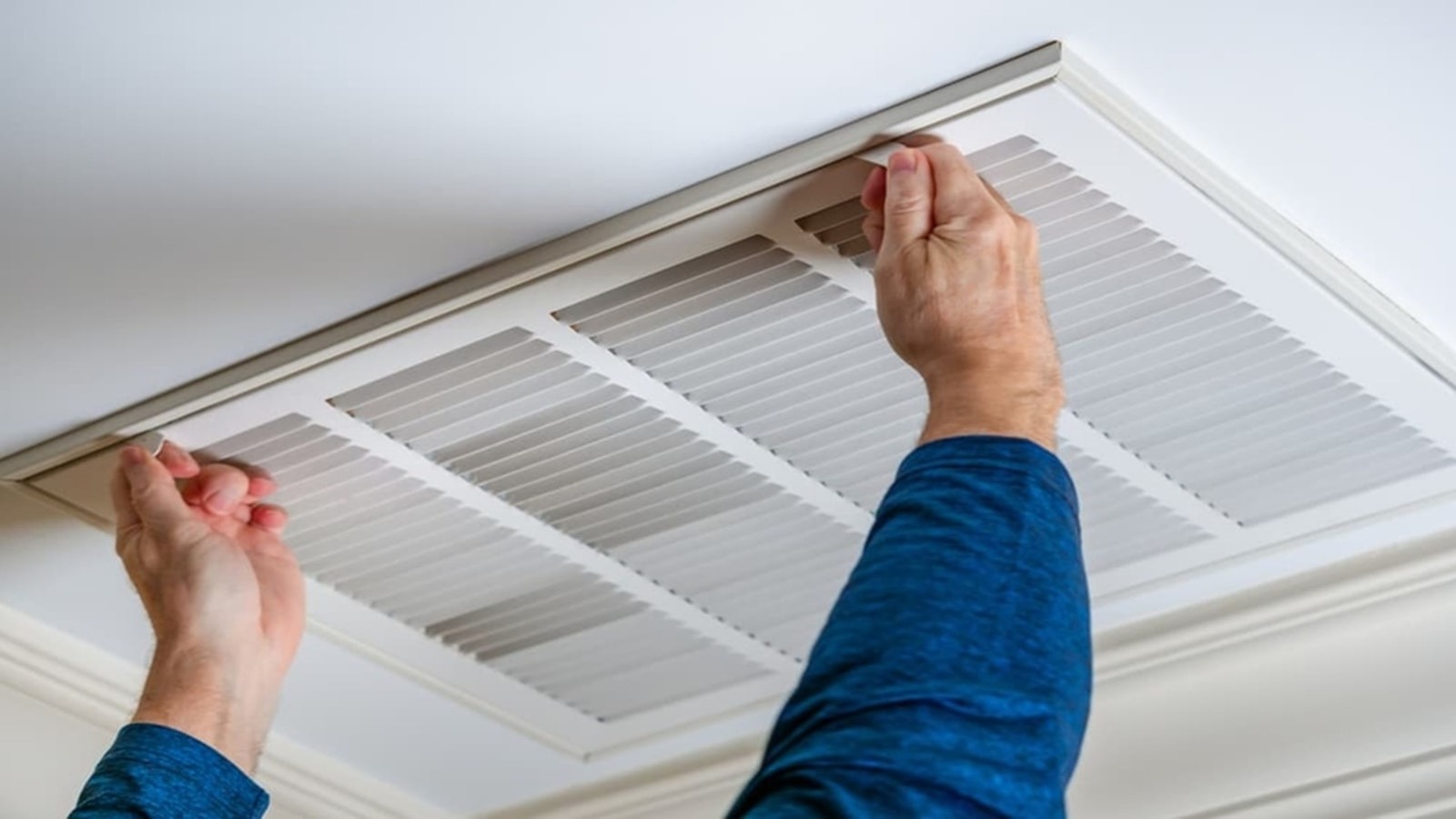
That fifth one is the easiest tell. Pull the filter out and look at it. If it's sucked into a curve, your system is straining.
The boring rules that matter more than the rating
Honestly? Changing your filter on schedule matters more than which mid-range filter you buy. In Cape Coral, with the system running nearly year-round, a one-inch filter is a monthly-to-every-other-month item, not a "when I remember" item. A clean MERV 8 outperforms a loaded MERV 13 on every measure that matters.
And check that it's the right size and seated properly. A filter that's a half-inch small lets unfiltered air bypass it entirely — you get the pressure drop with none of the protection.
When to just ask
If you don't know what your system can handle, that's a completely reasonable thing not to know. It depends on your equipment, your ductwork, your blower, and your return sizing — and the right answer for your house is a specific answer, not a shelf label.
We'll tell you straight: what your system can take, whether a thicker media cabinet is worth it for your situation, and whether the filter you've been buying is quietly costing you money every month.
Veteran-owned, straight answers, no upsell theater. Call (239) 402-3911 or schedule an inspection or maintenance visit.

