
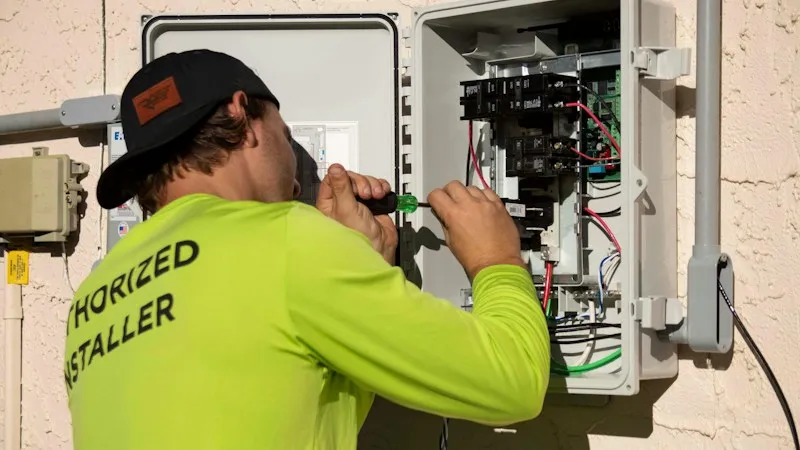
Electrical Panel Capacity and Your New AC: Why Some Cape Coral Homes Need an Upgrade Before a Bigger System Goes In
Here's a call we get more often than you'd think: a homeowner picks out a new AC system — bigger capacity, higher efficiency, sometimes a heat pump upgrade — and the install crew shows up to find the electrical panel can't actually handle it. Now there's a second project nobody budgeted for, and it's happening the morning the install was supposed to finish.
This isn't a sales tactic to upsell you an electrician. It's physics. A bigger AC system pulls more amperage, and if your panel is already maxed out running everything else in the house, there's nowhere for that extra load to go.
Why This Shows Up More in Cape Coral Than Other Places
A lot of homes in this area were built in the 1970s through the 1990s with 100-amp panels — which was plenty back when houses ran a smaller AC, a water heater, and basic appliances. Since then, the same panel is often still running the original AC circuit, plus a pool pump, an EV charger some homeowners have added, a tankless water heater, maybe a workshop or a home office full of electronics. None of that shows up as a problem until the day a new, larger system needs its own dedicated breaker and there isn't room — literally no open slots — or the math on total amp draw doesn't work anymore.
Newer homes usually run 150 or 200-amp panels, which gives a lot more headroom. If your house was built in the last 10–15 years, this is less likely to be your problem. If it's older than that and hasn't been upgraded, it's worth checking before you ever get a quote.
How to Know Before the Install Crew Finds Out For You
You don't need to be an electrician to get a rough read on this. Three things to look at:
- The panel's rated amperage. It's printed on the main breaker at the top of the panel — usually 100, 150, or 200. If you can't find it or it's not legible, that's worth a call on its own.
- Open breaker slots. A panel that's physically full, with no empty spaces for a new double-pole breaker, is a sign you'll need a sub-panel or a panel swap regardless of amperage.
- What else is already running off it. A pool pump, an EV charger, and a tankless water heater each pull real amperage. Stack a few of those onto an older 100-amp panel and there may not be enough capacity left for a larger AC, even with open slots.
None of that is a guarantee either way — it's a reason to ask the question before you're signing a contract, not after a crew is standing in your garage.
What an Upgrade Actually Involves
When a panel upgrade is needed, it's almost always one of two things: a licensed electrician adds a sub-panel to handle the new circuit, or the whole main panel gets swapped for a higher-amperage one. Lee County requires a permit and inspection for either, which is normal and protects you — an unpermitted panel change is a real problem when you go to sell the house later.
We don't do electrical work ourselves, and we'd rather tell you that upfront than pretend otherwise. What we do is check your panel's capacity as part of every AC replacement quote, before we ever write up a system size or a price. If an upgrade is needed, we'll tell you plainly, give you a straight answer on what it adds to the project, and point you to a licensed electrician we trust. No surprise change order on install day.
The Real Cost of Skipping This Step
The expensive version of this story isn't the panel upgrade itself — it's finding out about it after the old system is already pulled out and the new one is sitting in the driveway. Now you're paying rush pricing for an electrician, living without AC in Cape Coral for however many extra days that takes to schedule, and the install crew has to come back out a second time. All three of those costs are avoidable with one conversation before the contract is signed.
If you're planning an AC replacement and aren't sure what your panel can handle, that's exactly what we check during a free estimate — no guessing, no guilt trip, just a straight answer before you commit to anything.
Give us a call at (239) 402-3911 or schedule your free inspection online and we'll tell you where your home actually stands before you pick a system.

