
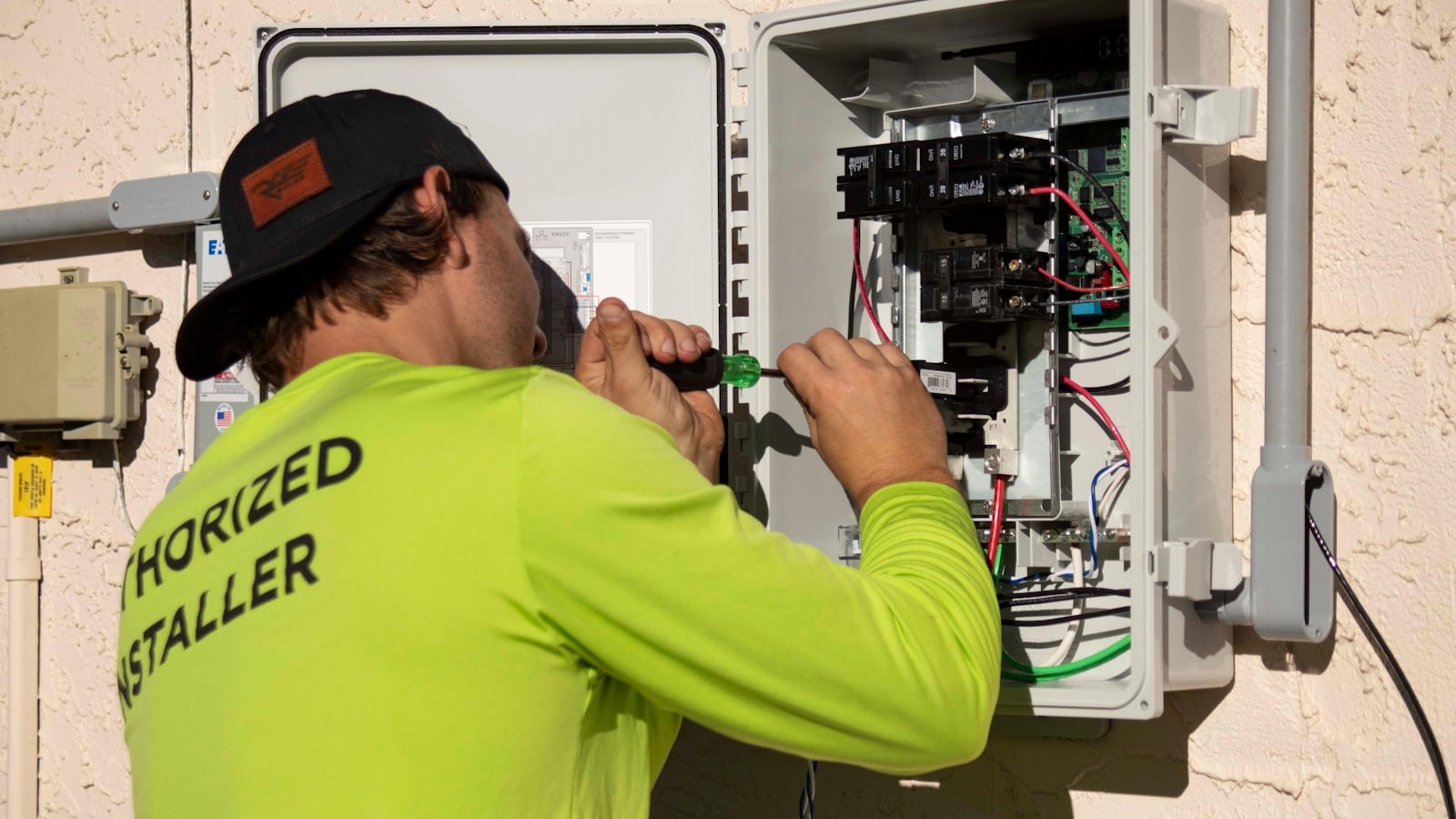
The $20 Part That Fakes a Dead AC: Why a Blown Capacitor Sends Cape Coral Homeowners Shopping for a $7,000 System They Don't Need
It's 3:00 on an August afternoon in Cape Coral. The thermostat is calling for cool, you can hear a low hum from the outdoor unit, but the big fan on top isn't turning. Inside, the air coming out of the vents is room temperature and getting warmer by the minute.
Almost every homeowner has the same first thought: the system's dead, and I'm about to spend seven thousand dollars.
Most of the time, that's not what's happening. That exact set of symptoms — humming outside, still fan, warm air inside — is the classic signature of a failed capacitor. It's a part roughly the size of a soup can that costs about twenty dollars, and replacing it is usually a same-visit repair.
What a capacitor actually does (in plain English)
Your outdoor unit has two motors that need a hard shove to get moving: the compressor and the condenser fan. A capacitor is a small storage tank for electricity that delivers that shove, then keeps a steady current going while the motors run. Think of it as the jumper cables that live inside your air conditioner permanently.
When it weakens, the motors still get power — that's the humming you hear — but not enough of a kick to actually start spinning. The unit sits there straining, drawing current, doing nothing useful, and getting hot.
Here's why this matters in Southwest Florida specifically: heat is the number one killer of capacitors. They're rated for a certain operating temperature, and a condenser sitting in full Cape Coral sun, running 10 to 14 hours a day from May through October, cooks that part far faster than the same unit would age in Ohio. A capacitor that might last a decade up north often gives out in five to seven years here. That's not a defect. That's Florida.
The symptoms homeowners mistake for a dead system
A failing capacitor almost never announces itself clearly. What you notice instead:
- A hum or buzz outside with no fan movement. The most telling sign. Power's arriving, the motor can't start.
- The AC blows warm air even though everything "sounds like" it's running. The air handler inside is fine; the outdoor half isn't doing its job.
- Hard starting. The unit takes several seconds of clicking or straining before it kicks on, or it starts fine in the cool morning and refuses at 4 PM when it's hottest.
- Short cycling. It runs a few minutes, shuts off, tries again.
- A tripped breaker. A failing capacitor makes the motor pull far more current than it should, and the breaker does its job.
- A visibly swollen or leaking part. A bulging top or oily residue on the can is a dead giveaway — though plenty of failed capacitors look perfectly normal.
None of those symptoms mean your system is finished. Every one of them can also be caused by other things — which is exactly why the diagnosis matters more than the guess.
Why this becomes a $7,000 conversation
Here's the honest version of what happens in this market every summer.
A homeowner's AC quits in August. Somebody comes out, confirms the unit isn't cooling, and steers the conversation straight to replacement — the system's old, parts are hard to get, refrigerant is changing, why put money into it. All of that can be true in general and still be irrelevant to your unit, which needed a twenty-dollar part and forty minutes.
The pressure works because you're miserable. It's 90 degrees in your living room, the kids are hot, and someone in a uniform is telling you the fix is a new system. Nobody makes a clear-headed financial decision in that moment, and some outfits know it.
A capacitor test takes about two minutes. A technician puts a meter on the part and reads its actual capacitance against the rating printed on the label. If it's rated 45 microfarads and reads 31, it's failed — that's a measurement, not an opinion, and you're entitled to see it. Any honest tech will show you the reading on the meter before quoting anything.
Please don't do this one yourself
We're the first to tell homeowners which jobs they can handle — rinsing a condenser, changing a filter, clearing a drain line. This isn't one of them.
A capacitor stores a serious electrical charge after the power is off. It does not care that you flipped the breaker. People have been badly hurt discharging one incorrectly, and the replacement also has to match the original's microfarad and voltage ratings — the wrong part will run your compressor rough and shorten its life, which turns a twenty-dollar problem into the expensive one you were trying to avoid.
What you can safely do before calling: check that the thermostat is set to cool and the batteries are good, check the breaker, check the disconnect box on the wall by the outdoor unit, and check that your filter isn't completely clogged. If all four are fine and you're hearing that hum, it's time for a technician.
When replacement genuinely is the right call
We'd be doing you no favors by pretending every AC problem is a cheap fix. Replacement deserves serious consideration when:
- The compressor itself has failed on a system outside its warranty — that's the expensive component, not the capacitor that starts it.
- The system is 15-plus years old and you're stacking a third or fourth repair in two seasons.
- You have a refrigerant leak in an older R-22 system, where the refrigerant now costs more than the repair is worth.
- Repair costs are climbing past a meaningful share of a new system and the unit's efficiency is costing you every month on your bill.
The difference between an honest recommendation and a sales pitch is simple: the honest one starts with a diagnosis and a number on a meter, then walks you through the options — repair now, repair now and plan a replacement for the off-season, or replace today. You get to choose, and nobody rushes you while you're sweating.
Get an actual diagnosis before you get a quote
If your Cape Coral or Fort Myers AC is humming, not cooling, or dying in the afternoon heat, find out what's really wrong before anyone hands you a proposal for a new system. It may well be the twenty-dollar part. Sometimes it isn't — but you deserve to know which one you're dealing with.
Seven Level Air is veteran-owned and serves Cape Coral, Fort Myers and the surrounding communities. We'll diagnose the problem, show you the reading, and give you a straight answer about what it needs. Contact us for an inspection, repair or maintenance visit — or call (239) 402-3911 and we'll get someone out to you.

